Women’s Health Physiotherapy for Prolapse
A prolapse occurs when the tissues of your vagina become weakened or stretched and allow any of your pelvic organs to bulge into your vagina. This could be your:
- bladder (anterior vaginal prolapse, cystocele)
- bowel (posterior vaginal prolapse, rectocele)
- uterus (uterine prolapse)
- it’s also possible for the top of your vagina to prolapse if you have already had a hysterectomy (vault prolapse).
You may have prolapse in only one area, or you may have more than one prolapse at the same time.
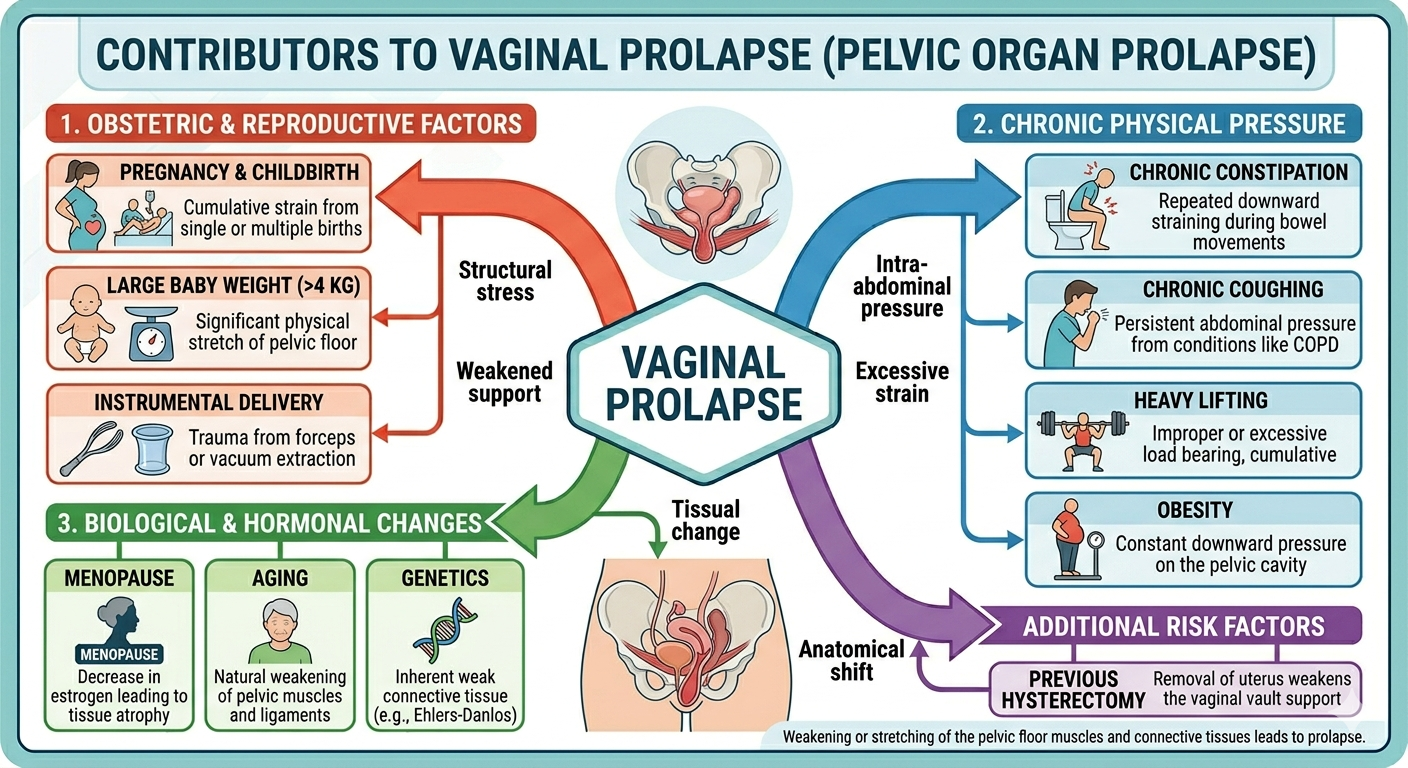
There are lots of reasons why you may develop a prolapse. It’s usually a ‘perfect storm’ of factors coming together over time, rather than one single event. However it develops, it’s usually distressing and uncomfortable. You are not alone as up to 50% of women have a prolapse.
Having a prolapse doesn't automatically mean that you will also have incontinence or other bladder or bowel symptoms
There are lots of simple things you can do to improve your symptoms, depending on your individual situation and symptoms. Booking a women’s health physiotherapy appointment is the first step in identifying the factors that have contributed to your prolapse, working to manage these, and to feeling comfortable again. You can find national guidance from ‘Pelvic Obstetric and Gynaecology Physiotherapy’ at https://thepogp.co.uk/_userfiles/pages/files/resources/ 232207pogpprolapse.pdf