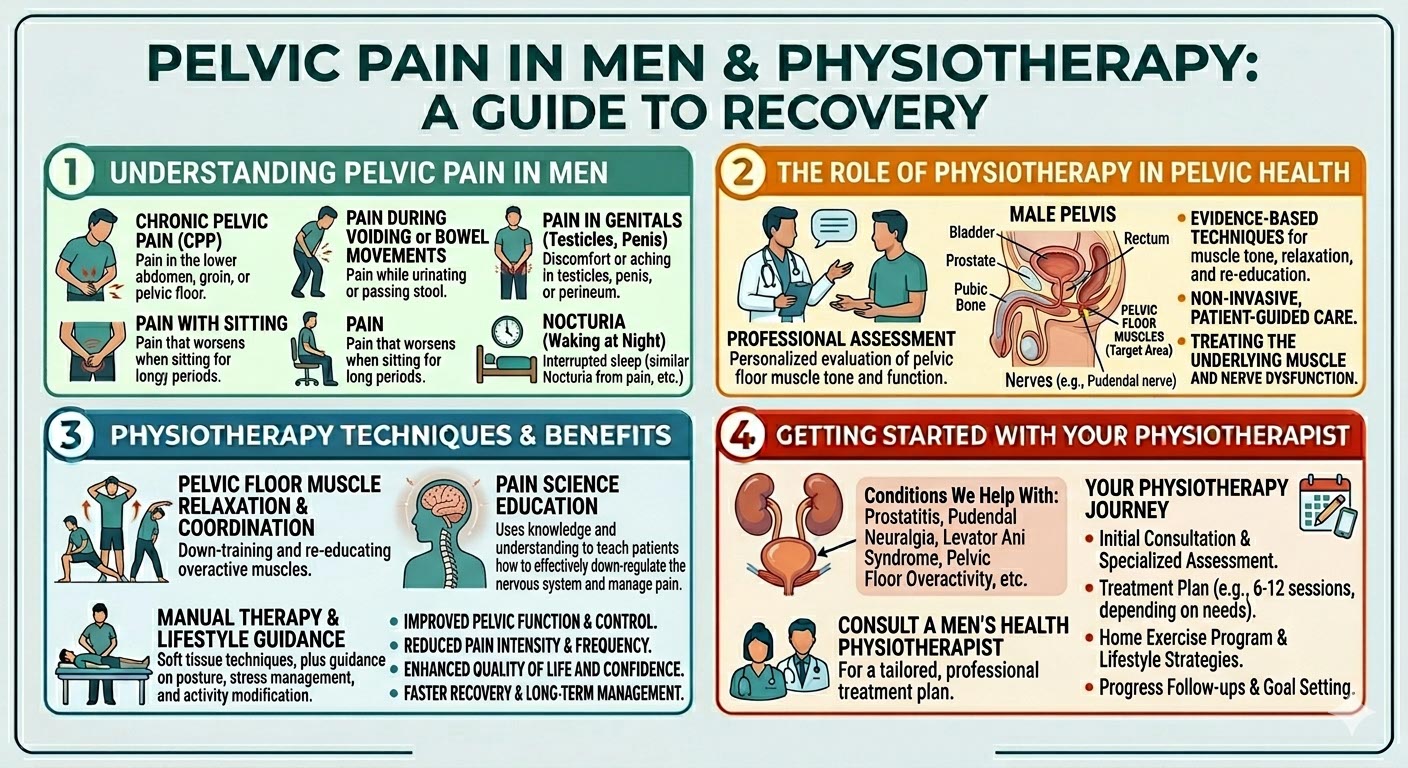
Men’s Health Physiotherapy for Pelvic Pain
Many men have pelvic pain and this may or may not have a diagnosis. These may include
- chronic prostatitis
- chronic pelvic pain
- bladder pain syndrome / interstitial cystitis.
Some men experience pelvic pain throughout their adult life, whilst others develop it after infection, injury or surgery. This can be short lived or chronic, and can affect how you function in your daily life.
Over the last ten years or more, research has shown us that we need to view pain as a whole body process, rather than just a problem localised to a particular part of your body. We also know that there are a significant number of men in pain who have experienced trauma in the past, and therefore a trauma-informed approach is essential.
Your pain is always real
Physiotherapy is an important part of managing, reducing or resolving your pain, and this may need to be done in conjunction with your GP and/or medical team. Assessment includes discussions about other things that are likely to be having an impact such as bladder and bowel symptoms, attitudes and beliefs, back pain and lifestyle factors. You may need an assessment of your joints and muscles in your back / hips / pelvis, and an internal examination may be useful if and when you can tolerate this. This is not the same as being examined by a doctor - it is part of treatment and will be fully discussed, and carried out step by step with your consent. Don’t let the thought of this put you off seeing a physiotherapist - there are lots of things we can work on together without this step.
Treatments are likely to include
- breathing and relaxation exercises
- individualised pelvic floor muscle exercises. These will be tailored to you, as sometimes these muscles are working too hard (overactive or hypertonic pelvic floor muscles) and sometimes they are weak and not working hard enough. These need different kinds of exercises.
- up to date pain science education
- exercises for your back / hips / pelvis as indicated
- input is needed from therapists and medical professionals sometimes, and you will be supported in this if it is needed.
Research tells us that the people who learn the most about pain improve the most