Coccyx (tailbone) pain
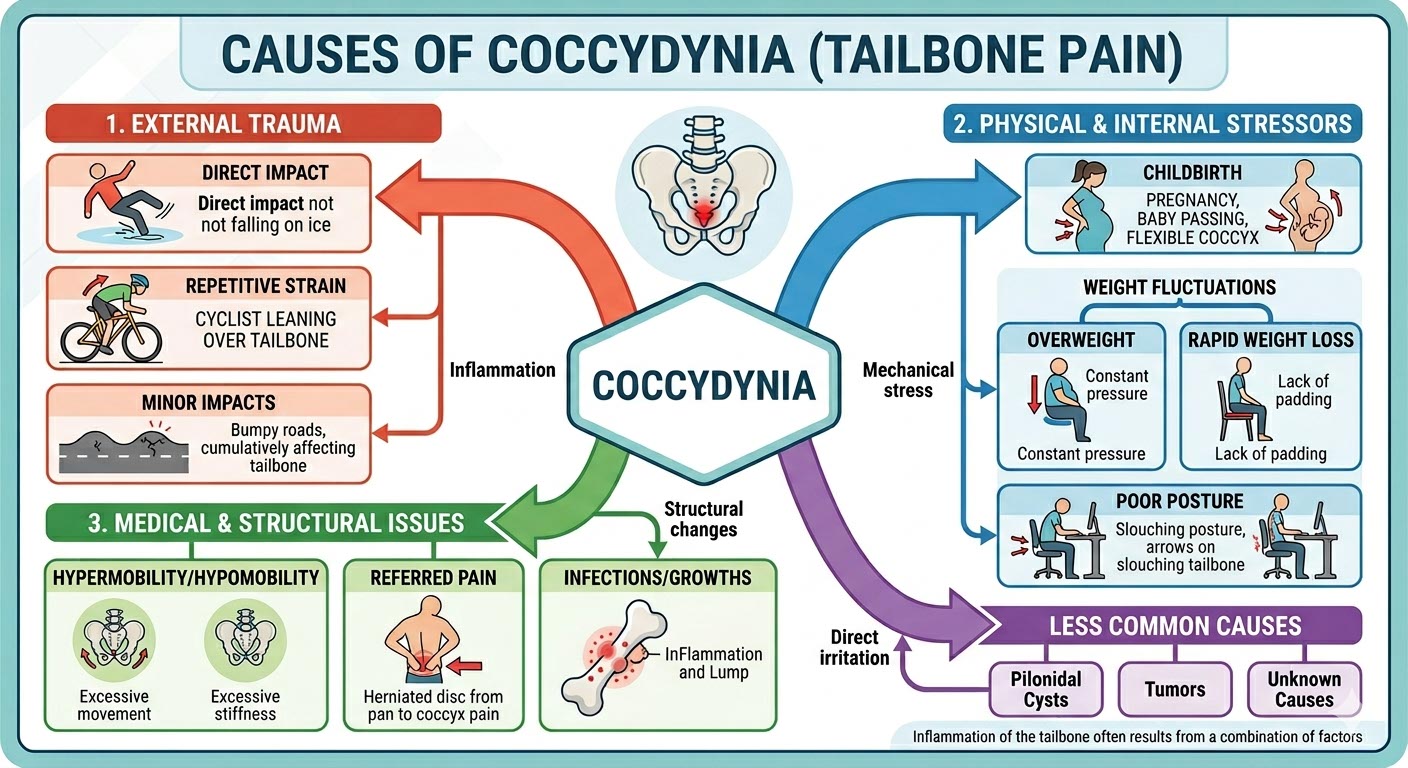
Coccydynia (pain in your coccyx / tailbone) is relatively rare, and makes up 1% of all back pain. However it can be distressing and make it almost impossible to do your daily activities, especially if they involve sitting. It is 5 times more likely to occur in women and is usually related to childbirth, injury to your coccyx, prolonged sitting or rapid weight loss.
Pain in your coccyx often comes from other parts of your back, particularly your lower back and sacrum, so it’s important to assess these first. Often these will need treatment first, and may well resolve your coccyx pain. Otherwise hands on treatment, education and exercises for your coccyx will be part of your treatment.
Some people also have problems with their pelvic floor muscles, and since these attach to your coccyx it may also be important to assess these. You may be asked about bladder, bowel and sexual symptoms in relation to your pain, and offered an internal examination. If the problem is more internal than external then you may benefit from having your treatment carried out internally, with your consent. Don’t let this put you off seeking physiotherapy input - there are lots of other ways to treat coccydynia!